The Mechanical Evolution of Crimson Desert
The open-world genre is currently undergoing a quiet revolution of tactility, shifting away from the floaty, arcade-like systems of the past decade toward a more grounded, simulation-heavy future. Pearl Abyss, the studio that carved out a massive niche with the hyper-detailed Black Desert, is now doubling down on this philosophy with Crimson Desert. The latest reveal concerning the game’s horse taming mechanic serves as a microcosm for this broader design shift. Instead of a simple button prompt or a repetitive rhythm game, the developers have introduced a spatial challenge that requires players to physically react to the animal’s anatomy. It is a move that signals a departure from the "gamified" abstractions we have grown accustomed to in titles like Assassin’s Creed, moving instead toward the heavy, intentional physics found in Red Dead Redemption 2.
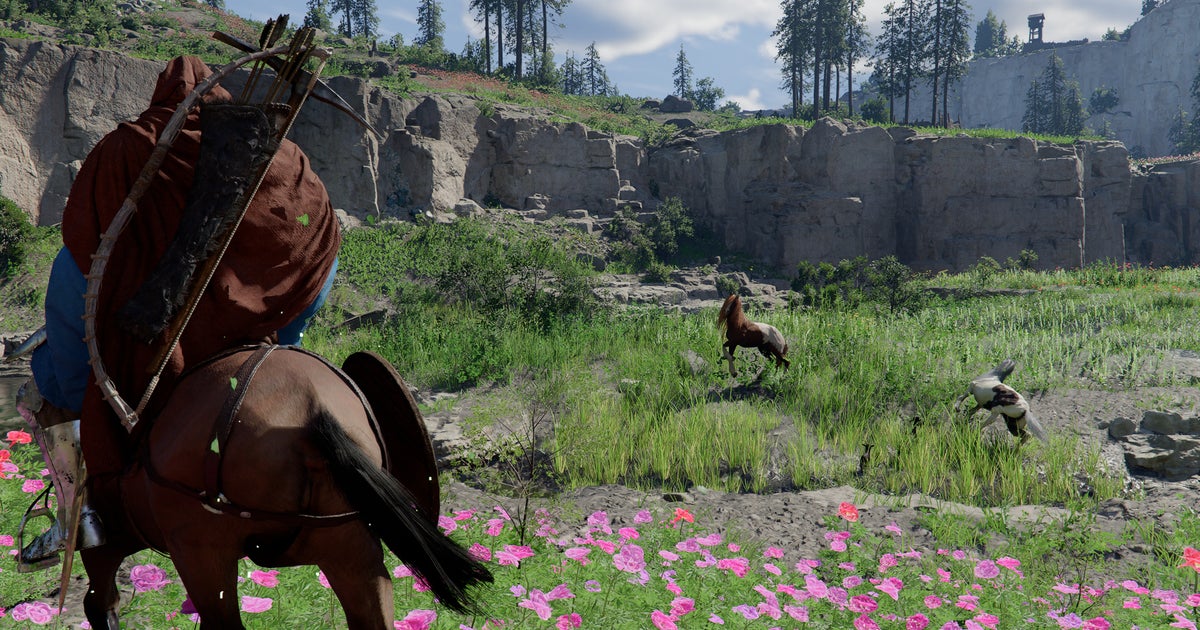

The core of this new system is deceptively simple yet technically demanding. To tame a horse in Crimson Desert, players must interact with the animal and move in the opposite direction of its tail until a progress dial fills up. This is not merely a visual cue; it is a test of spatial awareness within the 3D environment. By tying the taming success to the counter-movement of the horse’s tail, Pearl Abyss is forcing the player to engage with the creature as a physical entity rather than a static object. This unique mechanic offers an engaging challenge for players seeking to add horses to their stable, turning a routine chore into a high-stakes encounter. If you misread the animal’s momentum, the progress resets, and the opportunity slips away into the brush.
The Tail Logic of Hernand Island
Geography in modern game design is often used to gate content, and the placement of these wild herds is no exception. Wild horses can be found on an island southeast of Hernand, providing early opportunities for players to encounter and tame these majestic creatures. This specific location serves as a sandbox for the game’s "BlackSpace Engine" to show off its procedural animation and environmental density. Hernand Island acts as a soft tutorial zone where the stakes are low enough for experimentation but the rewards are significant enough to drive the player’s progression. This feature encourages exploration and adds a layer of depth to the game's early stages, ensuring that the player’s first major mount is earned through skill rather than handed out as a story beat.
The decision to place these creatures on an island southeast of Hernand is a calculated move to broaden the player's horizon. In many open-world titles, the "starter" mounts are often lackluster, designed to be replaced as soon as the player reaches the mid-game. By offering high-quality wild tames so early in the exploration phase, the developers are incentivizing players to break away from the main questline and engage with the world’s ecosystem. It is a classic "ludo-narrative" hook. You hear a rumor of wild herds, you navigate the treacherous waters to the island near Hernand, and you return to the mainland with a companion that feels uniquely yours. This creates a sense of ownership that a standard vendor purchase simply cannot replicate.
Statistical Variance within Crimson Desert
Once the physical struggle of the tame is over, the game transitions into a more traditional RPG layer, though one with significant depth. Upon successfully taming a horse, players are shown detailed stats about the animal. This transparency is crucial. In many games, a horse is just a speed buff with a different skin. In Crimson Desert, the stats imply a level of variance that could affect everything from stamina and sprint speed to perhaps even bravery in combat or terrain navigation. The immediate feedback loop—tame, analyze, decide—creates a "loot-like" dopamine hit. You aren't just looking for a horse; you are looking for the right horse for your specific playstyle.
The player’s agency does not end at the successful tame. They have the option to either register the horse in their stable or ride it immediately. This choice is more than just a convenience; it is a logistical decision. Immediate riding allows for instant gratification and a quick exit from the wilds, but registration ensures the animal’s safety and permanence within the player's fleet. This dichotomy suggests that Crimson Desert will treat its mounts as valuable assets rather than disposable tools. If a horse has exceptional stats but the player is currently deep in a dangerous territory, the tension between riding it out or finding a way to safely stable it becomes a compelling emergent narrative.
Exploration Frontiers Beyond Hernand Island
The broader implications of this taming system suggest that Pearl Abyss is aiming for a level of world-interactivity that rivals the top tier of Western RPGs. By focusing on the minutiae of animal behavior, they are building a world that feels reactive. The "opposite of the tail" mechanic might seem like a small detail, but it represents a larger commitment to physical realism. This is the hallmark of the BlackSpace Engine—a proprietary bit of kit that allows for high-fidelity physics and lighting that few other studios can match. When you are on that island near Hernand, the wind, the grass, and the horse’s movements are all part of a cohesive simulation designed to immerse the player in a way that menus never could.
Ultimately, the horse taming system is a litmus test for the rest of the game’s mechanics. If the developers are willing to put this much thought into how a player mounts a horse, one can only imagine the complexity waiting in the combat, crafting, and traversal systems. Crimson Desert is positioning itself not just as a game, but as a destination—a place where the rules of the world are consistent and the rewards are commensurate with the effort exerted. The horses of Hernand are just the beginning. As players venture further into the continent of Pywel, the lessons learned on that small island southeast of Hernand will likely become the foundation for a much larger journey through one of the most technically ambitious worlds in recent memory.
The success of this granular taming system will likely trigger a wave of imitators seeking to move away from the automated systems that have dominated the last decade of open-world design. As players spend more time on Hernand Island, the demand for "sim-lite" mechanics in mainstream titles will force competitors to reconsider their approach to environmental interaction. Crimson Desert is poised to become the new benchmark for how developers translate physical struggle into digital satisfaction.
Tags : #CrimsonDesert #HorseTaming #GamingNews #UniqueMechanic #ProfessionalGaming