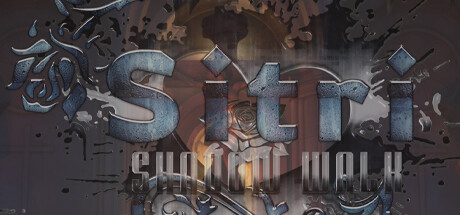
The Scourge Tai Ương Explores Vietnamese Folklore
The arrival of The Scourge | Tai Ương represents a significant milestone for the Vietnamese development scene, which has been steadily gaining traction in the global horror market. This isn't your standard jump-scare simulator built on generic assets. Instead, it leverages deep-seated urban legends and the claustrophobic architecture of 1990s Vietnam to create a sense of lingering dread. The game functions as a cultural artifact as much as a piece of entertainment. It forces players to navigate the intersection of traditional superstition and modern urban decay. The lighting is oppressive. The sound design is jagged. It demands that the player understand the context of the environment before they can hope to survive its threats.
Investigating the mechanics reveals a commitment to psychological tension rather than combat. By focusing on the "Tai Ương" (the scourge or calamity), the developers tap into a specific brand of Southeast Asian horror that emphasizes karmic debt and ancestral hauntings. This release follows a trend of regional horror finding massive success on Steam, proving that players are hungry for narratives that exist outside the Western canon. The Scourge doesn't just want to scare you; it wants to educate you on the specific nightmares of a different hemisphere. It is a brutal, uncompromising look at how folklore survives in the cracks of a concrete jungle.
Chained Wheels Disrupts Cooperative Multiplayer Physics
Cooperative gaming often relies on the illusion of synergy, but Chained Wheels is designed to shatter that illusion through the cold, hard reality of physics. The premise is deceptively simple: players must drive trucks that are physically tethered together. It sounds like a gimmick. It plays like a nightmare. In an industry obsessed with "player agency," Chained Wheels introduces "player interference" as its primary mechanic. Success requires a level of communication that most Discord calls are simply not equipped to handle. One wrong turn by the lead driver translates into a catastrophic momentum shift for the trailer, often resulting in a recursive loop of failure and laughter.
The technical architecture behind the game’s towing physics is surprisingly robust. This isn't arcade-style driving; it’s a simulation of weight, friction, and tension. When two trucks are fighting for grip on a muddy incline, the game becomes a high-stakes puzzle. It forces a radical rethinking of spatial awareness. You aren't just driving your vehicle; you are managing a shared center of gravity. This type of "friction-based" gameplay is becoming a staple of the indie scene, where the difficulty arises not from enemy AI, but from the inherent complexity of the game’s own systems. It turns the act of movement into a constant negotiation.
Dungeon Bodega Simulator Reimagines Retail Narratives
While most fantasy games cast the player as the hero slaying dragons, Dungeon Bodega Simulator, released on March 24, focuses on the person selling that hero their health potions. It is a narrative-driven retail simulation that strips away the glamour of adventuring to reveal the mundane logistics of a magical economy. You are a clerk in a high-fantasy convenience store. Your customers are exhausted warriors, eccentric mages, and the occasional monster looking for a snack. The game treats the bodega as a stage for interpersonal drama. Every transaction is a dialogue tree. Every inventory decision is a political statement within the game’s world.
The brilliance of this title lies in its subversion of the "shopkeeper" trope. Usually, NPCs exist only to serve the player’s needs. Here, the shopkeeper is the protagonist, and the "heroes" are often annoying, entitled, or broke. It captures the specific fatigue of service industry work and transplants it into a world of swords and sorcery. By focusing on the storytelling potential of a single location, the developers have created a dense, reactive world that feels larger than the sum of its parts. It is a sharp critique of consumerism wrapped in a cozy, pixel-art aesthetic. The stakes aren't the end of the world; the stakes are making rent while dealing with a customer who refuses to pay for their mana crystals.
DVD Survivors Mirrors Early Digital Aesthetics
Nostalgia is a powerful currency, but DVD Survivors, launched on March 26, targets a very specific era: the late 1990s and early 2000s. It is a "survivors-like" game that adopts the visual language of early DVD menus and primitive digital interfaces. The screen is cluttered with artifacts of a bygone era—bouncing logos, pixelated gradients, and the distinct hum of a disc drive. It is an aesthetic exercise in "vaporwave" sensibilities combined with the addictive, horde-clearing gameplay popularized by Vampire Survivors. The game doesn't just play on nostalgia; it weaponizes it to create a hypnotic, sensory experience.
The gameplay loop is fast and unforgiving. As you dodge enemies, you collect "data" to upgrade your "firmware," all while the UI flickers like a scratched disc. This commitment to the bit is what separates it from the dozens of other Survivor-clones on the market. It understands that in the current indie climate, visual identity is just as important as mechanical depth. By leaning into the "ugly-chic" of early digital media, the developers have carved out a unique space for themselves. It is a reminder of a time when technology felt tactile and slightly broken. For a generation of gamers who grew up watching a logo bounce around a TV screen, DVD Survivors is a fever dream of childhood boredom turned into a high-octane survival challenge.
The upcoming fiscal quarter will likely see a surge in "cultural-physics" hybrids that prioritize regional storytelling through complex, interactive environments. Success for these titles will depend on their ability to maintain viral momentum through high-stress cooperative play and aesthetic irony. We expect Steam’s discovery algorithms to increasingly favor these high-concept experiments as players continue to migrate away from homogenized AAA experiences.
Tags : #Steam #IndieGames #UniqueConcepts #GamingNews #NewReleases