The survivor-lite genre is currently experiencing a period of extreme saturation. Ever since Vampire Survivors redefined the value proposition of the five-dollar indie game, the market has been flooded with "bullet heaven" clones that prioritize dopamine over depth. Rogueside, the studio known for its distinct hand-drawn aesthetics, is attempting to break this cycle with Devil Jam. It is a title that swaps the mindless auto-firing of its contemporaries for a structured, rhythmic cadence that demands more from the player than simple directional movement. While the ambition is palpable, the execution suggests a developer still finding its footing in a crowded arena.
Rogueside Reinvents the Survivor Genre Rhythm
At the center of Devil Jam lies a mechanical hook that is as punishing as it is innovative. Your primary weapon is an electric guitar, but this isn't a standard projectile launcher. To deal damage, players must fire on the beat of a 4/4 time signature. This creates a visceral connection between the soundtrack and the gameplay loop that few roguelites attempt. When you are in the zone, the game feels like a deadly dance. You find yourself internalizing the tempo, timing your dashes and shots to a percussive heart rate that dictates the flow of every encounter. It is a bold departure from the "afk-friendly" nature of the genre, forcing a level of engagement that is often missing from modern survivors.
However, this rhythmic focus is a double-edged sword. Because the combat is tied so tightly to the beat, the game lives or dies by its musical variety. While the production quality of the heavy metal and electronic tracks is high, the lack of traditional song structure becomes a significant hurdle during extended play sessions. There are no bridges, no soaring choruses, and no dynamic shifts to signal a change in combat intensity. You are effectively playing along to a high-quality metronome for thirty minutes at a time. This repetition can turn the innovative rhythm system into a chore, making the 4/4 beat feel more like a constraint than a creative tool.
The Rhythmic Friction of Devil Jam
The gameplay loop is further complicated by a dual-track progression system. Players can gain power by collecting items linked to the Seven Deadly Sins, or by hoarding resources to gain permanent skill upgrades between runs. This creates a constant tension between short-term survival and long-term growth. The Sin-based items offer immediate, often chaotic power spikes that can turn a failing run into a power fantasy. One moment you are struggling to clear a path; the next, you are a whirlwind of necrotic energy. It is in these moments of peak synergy that Devil Jam shines brightest, showcasing the potential of Rogueside’s design philosophy.
Despite these highlights, the narrative weight of the game feels somewhat disconnected from the action. The premise—a desperate contract with the devil to take down Death itself—provides a moody, gothic backdrop, but it rarely impacts the moment-to-moment decision-making. We have seen this "deal with the devil" trope many times before, and without more meaningful narrative beats during the runs, it serves as little more than flavor text. The thematic depth is present in the art, but it lacks the narrative connective tissue required to make the player truly care about the protagonist's soul.
Seven Deadly Sins Define Devil Jam
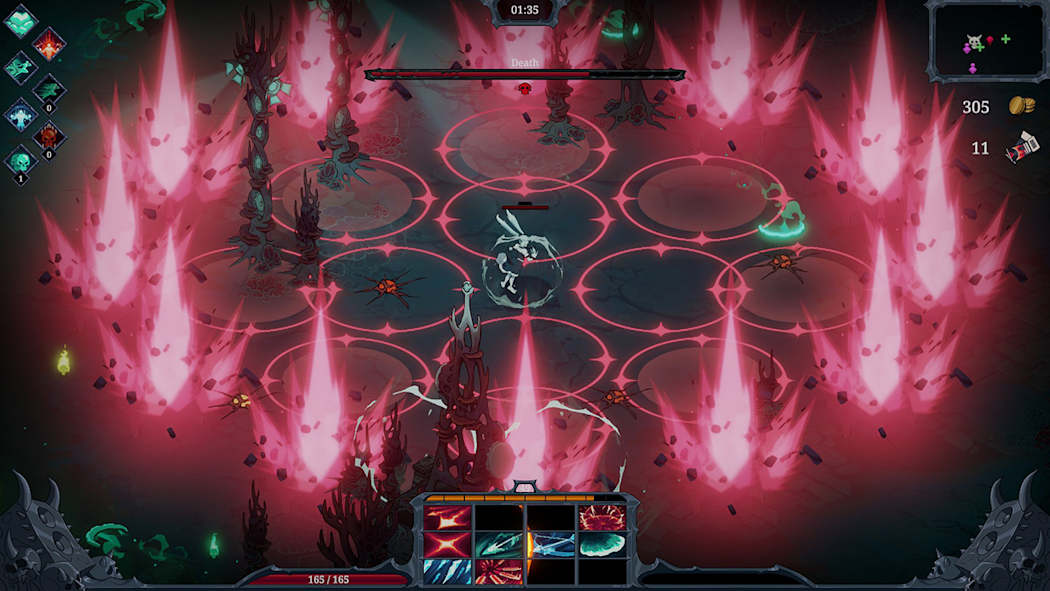
Visually, the game is a mixed bag that will likely divide the community. Rogueside has opted for a highly detailed art style that looks stunning in static screenshots. The gothic architecture and demonic creature designs are dripping with personality. Yet, when the screen fills with hundreds of enemies, the aesthetic choice clashes with functional clarity. The character models are remarkably small, making it difficult to track your exact hitbox amidst the sea of projectiles and particle effects. In a game where missing a beat or a step results in a swift game over, this lack of visual hierarchy is a persistent frustration.
Performance stability is another area where the experience wavers. While the game maintains a steady frame rate on mid-range rigs during the early waves, the late-game "bullet hell" segments can cause noticeable stuttering. For a rhythm game, even a minor drop in performance is catastrophic. If the visual feedback desyncs from the audio cue by even a few milliseconds, the entire combat loop falls apart. Rogueside has built a beautiful world, but it currently feels like it is pushing the engine just a bit too far for the precision the gameplay demands.
Visual Clarity Hampers the Rogueside Experience
Critics have largely settled on a 6.5 out of 10 for Devil Jam, a score that feels like a respectable "not bad" in a genre where mediocrity is the baseline. It is a game of high highs and frustrating lows. The rhythm mechanics provide a fresh perspective on a tired formula, but the repetition of the soundtrack and the visual clutter prevent it from reaching the heights of genre leaders. It is an experimental piece of software that feels like a very polished Early Access title rather than a definitive final version. There is greatness buried under the small sprites and looping riffs, but it requires a patient player to find it.
Ultimately, your enjoyment of Devil Jam will depend on your tolerance for rhythmic friction. If you are looking for a relaxing game to play while watching a second monitor, this is not it. It demands your ears, your eyes, and your reflexes in equal measure. Rogueside has proven they can iterate on a popular genre with style, but the substance needs a bit more tuning before this guitar is ready for the main stage. It is a fascinating failure in some regards, and a localized triumph in others, marking it as one of the most interesting, if flawed, releases of the season.
Rogueside will likely address the visual clarity and character scaling issues through a series of post-launch balance patches. The unique rhythm-based combat system provides a sturdy foundation that could easily support more diverse musical genres in future DLC. Devil Jam is poised to become a cult favorite for rhythm enthusiasts while remaining a niche curiosity for the broader roguelite audience.
Frequently Asked Questions
Is Devil Jam worth the current asking price?
For fans of rhythm-heavy combat, the unique mechanics justify the entry fee, though casual players might find the content repetition thin. It offers a solid ten to fifteen hours of gameplay before the loops become overly familiar.
How does Devil Jam perform on the Steam Deck?
The game runs at a mostly stable 60 FPS, but the small character visuals are even harder to track on a handheld screen. You may need to adjust the brightness and contrast settings to maintain visual clarity during late-game waves.
What is the most effective character build for beginners?
Focusing on the "Greed" items from the Seven Deadly Sins allows for faster resource accumulation to purchase permanent health upgrades. Prioritizing the "Aura" skills will also help mitigate the difficulty of aiming while maintaining the 4/4 beat.
Tags : #DevilJam #GamingCritics #ProfessionalGaming #EsportsNews #VideoGameDebates