The Unmatched Power of Radeon HD 6990
In the high-stakes silicon wars of the early 2010s, AMD executed a maneuver that would be remembered as both a technical triumph and a cautionary tale. Released in March 2011, the AMD Radeon HD 6990 arrived during a period of intense volatility in the enthusiast market. Codenamed "Antilles," this dual-GPU monster was designed for one purpose: total market dominance. It succeeded. Upon its debut, it was officially crowned the fastest graphics card in the world, a title it wore with a mixture of pride and excessive heat. For gamers at the time, the sheer numbers were staggering. It featured two full Cayman XT cores on a single printed circuit board, delivering a combined 4GB of GDDR5 VRAM. This was an era when 1GB was considered the standard for high-end gaming. AMD wasn't just pushing the envelope; they were shredding it.
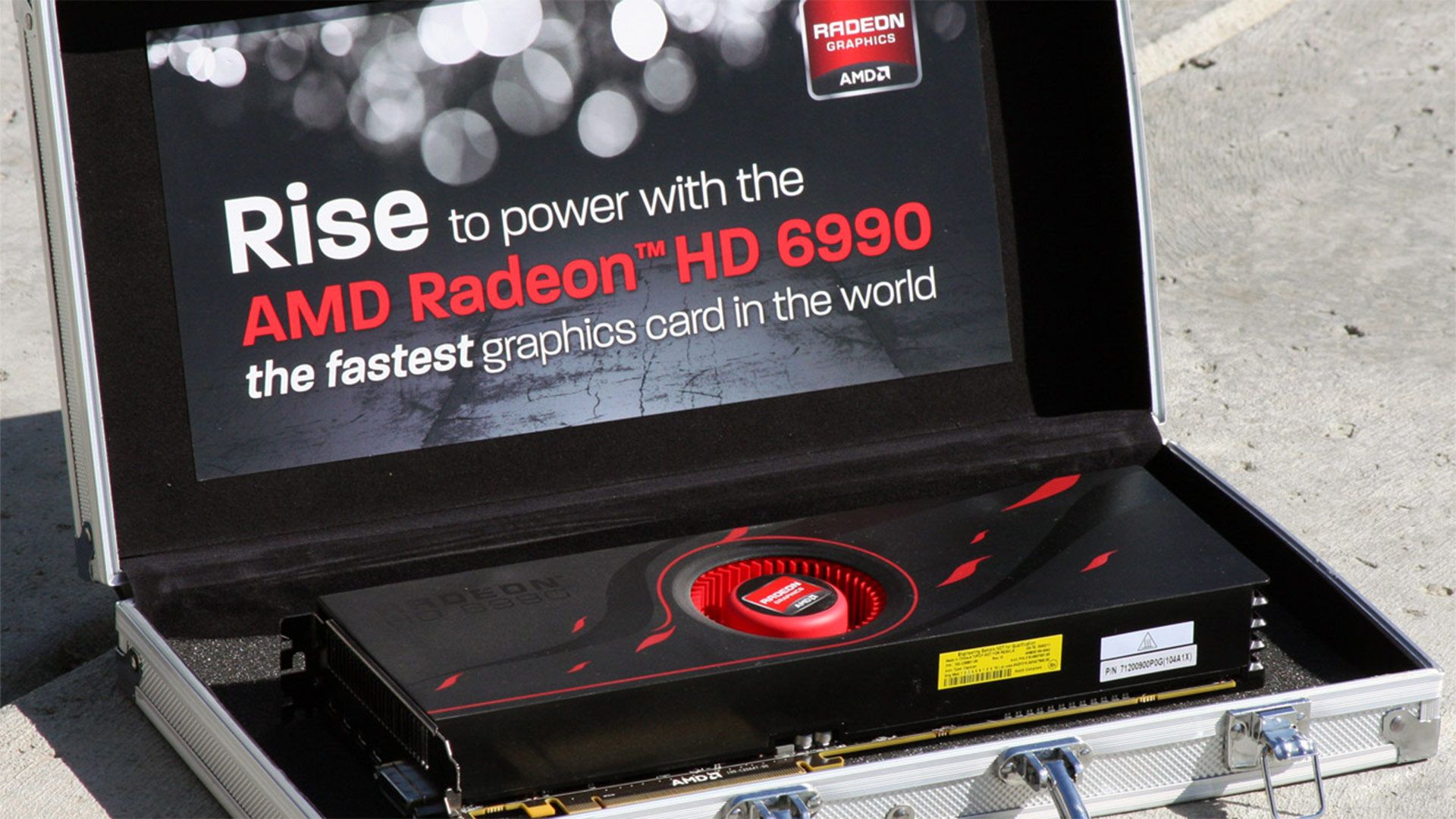
The hardware architecture of the Radeon HD 6990 represented the pinnacle of the TeraScale 3 design. By bridging two GPUs with an internal PLX bridge chip, AMD managed to cram 3,072 stream processors into a single PCIe slot. It was a brute-force approach to performance. At the time, multi-monitor setups and 2560x1600 resolutions were the frontier of PC gaming, and the 6990 was the only card that could reliably handle those pixel counts without stuttering. Enthusiasts flocked to it. They wanted the best, and for a few glorious months, the 6990 was the undisputed king of the benchmarks. It decimated the competition from Nvidia, forcing a frantic response from the green team. However, this raw power came with a physical cost that many users were unprepared to pay.
The card was massive, measuring a full 12 inches in length. It required a robust power supply and a case with exceptional airflow. It wasn't just a component; it was a commitment. AMD even included a dual-BIOS switch, famously known as the "Uber Mode." Flipping this switch increased the clock speeds and the core voltage, pushing the card beyond its standard thermal limits. It was a bold move that essentially invited users to overclock their hardware with a flick of a finger, provided they were willing to accept the consequences. The 6990 was a product of a different time, a time when efficiency was a secondary concern to the pursuit of the highest possible frame rates.
Thermal Realities Facing the AMD Platform
Engineering a dual-GPU card on 40nm process technology was an exercise in thermal management brinkmanship. The Radeon HD 6990 became notorious for its aggressive fan profile and the resulting acoustic signature. Under heavy load, the central blower fan could reach speeds that resembled a jet engine idling on a runway. It was loud. It was distracting. Reviewers at the time noted that the card’s noise levels often exceeded 60 decibels, making it one of the loudest consumer electronics ever sold for home use. The heat output was equally concerning. The card could easily reach temperatures north of 90 degrees Celsius, radiating enough thermal energy to heat a small room during a winter gaming session. This was the trade-off for being the fastest.
Power consumption was the other side of the controversy. The Radeon HD 6990 had a typical power draw of 375 watts, but in its "Uber Mode," that figure could spike well over 450 watts. This necessitated two 8-pin power connectors and a high-quality 750W or 850W power supply just to keep the system stable. In an era where energy prices were beginning to climb and environmental awareness was entering the mainstream, the 6990 felt like a relic of excess. It was a gas-guzzling muscle car in a world that was starting to look at hybrids. The design prioritized raw throughput over architectural elegance, leading to a user experience that was as frustrating as it was impressive. You could play any game at maximum settings, but you had to wear noise-canceling headphones to do it.
Critics argued that the card was a "paper champion." While it won the benchmark wars, it often struggled with micro-stuttering, a common ailment of multi-GPU setups where the two chips are slightly out of sync. This meant that while the average frame rate was high, the actual smoothness of the gameplay could feel inferior to a single, more stable GPU. This discrepancy fueled a growing debate in the tech community. Is a card truly the "fastest" if the user experience is marred by noise, heat, and inconsistent frame delivery? The Radeon HD 6990 forced the industry to confront the limits of the dual-GPU strategy, eventually leading both AMD and Nvidia to move toward larger, more efficient single-chip designs in the years that followed.
Ethical Engineering and the Radeon HD 6990
Looking back from a modern perspective, the Radeon HD 6990 serves as a pivot point for the entire industry. Today, the conversation has shifted from "can we build it" to "should we build it." The controversy surrounding the 6990's sustainability is more relevant now than ever. As modern GPUs like the RTX 4090 push toward 450W and beyond, the lessons of the 6990 remain unlearned by some, yet more vital for others. We are seeing a divergence in the market. On one side, there is the pursuit of uncompromised performance at any cost to the environment or the power bill. On the other, there is a push for RDNA-style efficiency, where performance-per-watt is the metric that truly defines a successful architecture. The 6990 was the extreme end of the former.
The environmental footprint of such hardware cannot be ignored in the current climate. Manufacturing a card with the complexity of the 6990, combined with its massive power requirements over its lifespan, represents a significant carbon cost. Is the ability to play a video game at a slightly higher resolution worth the ecological impact of a device that consumes as much power as a refrigerator? This question wasn't being asked loudly in 2011, but it dominates the discourse today. The Radeon HD 6990 was a product of its environment—a competitive, unregulated race for specs—but it also highlighted the need for a more responsible approach to hardware design. Practical user needs often clash with the marketing desire for "world's first" titles.
Ultimately, the Radeon HD 6990 was a spectacular failure of restraint. It proved that AMD could out-engineer Nvidia in a straight fight, but it also proved that the consumer market had a breaking point regarding noise and heat. It pushed the industry to refine CrossFire and SLI technologies, eventually leading to their obsolescence as developers favored the simplicity of single-chip optimization. The 6990 remains a legendary piece of hardware, a dual-headed beast that refused to go quietly. It was the end of an era. It was the peak of the "more is more" philosophy, and its legacy is visible in every oversized, triple-slot cooler we see on the market today. We are still living in the shadow of the 6990’s thermal output.
The trajectory of high-end silicon will likely pivot away from the raw power-at-any-cost model as global energy regulations tighten around consumer electronics. Manufacturers will be forced to prioritize AI-driven upscaling and architectural efficiency over increasing the physical footprint of the silicon die. Within the next decade, the "flagship" graphics card will be defined not by its peak wattage, but by its ability to deliver path-traced visuals within a strictly capped thermal envelope.
Tags : #AMD_Radeon_HD_6990 #Gaming_GPU #High_End_Video_Card #Graphics_Performance #Tech_News_Statics